


Page 159 - GIS for Science, Volume 3 Preview
P. 159
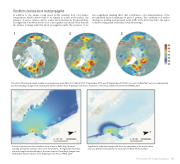
The effects of surface ice on sound propagation
In addition to the unique sound speed profile resulting from cold surface temperatures, which causes sound to be trapped in a duct at the surface, the presence of sea ice causes sound to scatter and sometimes be blocked entirely. Ice ridges that form when sheets of ice come together can extend 100-m beneath the surface, forming walls that block propagation paths. The presence of ice
has a significant masking effect that contributes to the characterization of the pre-industrial Arctic soundscape as quiet or pristine. The combination of surface ducting, ice melting, and increased vessel traffic in the Arctic has led to the region today becoming much louder than it was 20 years ago.
  123
Pan-Arctic 25 Hz band weekly median sound exposure level (SEL) for 1) March 2015; 2 September 2015; and 3) September 2019 (SEL is in units of dB/μPa2). Sea ice is represented by white shading. Images from Underwater Noise Pollution from Shipping in the Arctic, Protection of the Arctic Marine Environment (PAME), 2021.
Acoustic transmission loss simulation for a vessel in Baffin Bay, Nunavut, Significantly reduced sound profile from the same ship in the winter, when Canada, during the summer, when ice is not present. A single ship ensonifies sea ice is present and scatters the sound as it reflects off the surface.
the entire region across the bay to the west coast of Greenland. Images from
Underwater Noise Pollution from Shipping in the Arctic, PAME, 2021.
  The Science of Ocean Acoustics 147


