


Page 182 - GIS for Science, Volume 3 Preview
P. 182
NATIONAL GEOGRAPHIC EXPLORERS
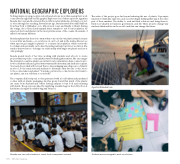
Nothing inspires young people’s curiosity and actions more than seeing their work come alive through National Geographic Explorers. One of these explorers, Agustina Besada, discovers and documents the world’s wonders while also striving to protect it, often through her teaching. Several years ago, Besada traveled by small sailboat from New York to Gilbraltar, on to Africa’s west coast, and finally, to Brazil. During the voyage, she collected and mapped water samples to test for microplastics. As expected, she found plastics in the most pristine areas of the oceans, thousands of miles from human habitats.
Besada explains that there is no away when someone throws plastic away. It returns to us as litter and waste—on our shores, in our food, and in the marine life we lose when species get caught in plastics or consume microplastics, which enters the food chain and eventually, our bodies. Recycling can help, but it’s not a solution. She teaches that we have to redesign our relationship with single-use plastic and use it only sparingly.
Besada spends much of her time working with students and schools to create projects that respond to ocean plastic waste by finding alternatives. She encourages the students to examine plastic use in their local communities, draw connections to how local habits influence global waterways and biodiversity, and draft action plans. One team she worked with noticed that cookie packaging was a big source of plastic at school. So the team surveyed students to determine their favorite cookie, wrote to the cookie maker, and asked, “You make our favorite cookie, but we don’t want to use plastic, can you sell them to us in bulk?”
The company didn’t respond, so they partnered with a local bakery and purchased cookies without plastic packaging. Another group found that much of the plastic use came from students and others leaving campus to buy food and returning with lunch. The group responded by supplying reusable bags in the lobby. Now at lunchtime, they grab a reusable bag and return it.
Besada uses time with students to create local ocean plastic research.
The value of the project goes far beyond reducing the use of plastic. It prompts students to think like explorers, and once they begin thinking that way, it becomes part of their mindset. The ability to seek and find solutions and bring them to fruition is valuable in business, government, and life. These projects change way students think and live in the world—and that can change the future.
 Agustina Besada at sea.
  170
GIS for Science
Students are encouraged to work on solutions.


