


Page 183 - GIS for Science, Volume 3 Preview
P. 183
USING GIS TO CULTIVATE EMPATHY FOR THE EARTH
Can we care about something that we never see or experience? Studying manta rays allows students to learn about the species, such as their place in the food web and importance to the marine ecosystem, but does it inspire them to protect manta ray habitats?
How different would the learning experience be if students traveled to the Great Barrier Reef with National Geographic Explorer Erika Woolsey and to see hundreds of manta rays feasting on plankton together? And then map their migration as they seek food supplies and warm water temperatures? This is the power of geospatial technologies.
More than 20 years ago, Sylvia Earle raised a question that remains just as relevant today: “Where does GIS come into all of this? I’ll put it another way. Where doesn’t GIS come into the understanding of the ocean? After all, marine ecosystems, just as those on the land, are geospatial, and therefore, so are the solutions that we must craft as we go forward.”
GIS takes learners and solution seekers to any part of the globe and helps them visualize information in ways that reveal patterns and trends that can unlock new insights about Earth. Modern tools help learners develop geographic thinking, problem-solving, and storytelling abilities so they can confront challenges. Introducing these resources to children early in their school years helps them become digital and geospatial learners.
Architects of change
The greatest accomplishment of human civilization, by far, will not come from the genius of one scientist, inventor, activist, or moral leader. It will come from the combined efforts of people helping to build a culture that uses its energy, genius, innovation, inclusivity, and idealism to create a thriving planet.
When we consider that 42% of the world’s population is under the age of 25, young people are key in seeking solutions now and sustaining a healthy planet in the future. They have the collective talent, energy, and vision, but equipping them with the necessary skills requires cultivating learning environments that spark their curiosity, engage them with dynamic and contextualized learning experiences, and empower them with geospatial concepts and tools to make a difference.
Nathaniel Soon, for example, is part of a large, diverse community of young solution-seekers and planetary stewards—a generation known as GenGeo. This global community organizes peer meetups, serves as mentors, models leading with empathy, and channels collective knowledge into ideas, action, and real-world solutions.
As Soon progresses through college, he champions ocean conservation globally through his visual storytelling work, collaborations with partners, and other social enterprises. He is an Ocean and Climate Youth Ambassador with Peace Boat, an
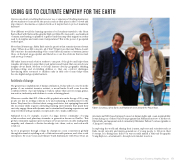
Fabien Cousteau, Sylvia Earle, and Nathaniel Soon aboard the Peace Boat.
international NGO based in Japan focused on human rights and ocean sustainability. It was during one of these Peace Boat programs that Nathaniel met two of his heroes: Sylvia Earle and aquanaut and documentary filmmaker Fabien Cousteau (grandson of Jacques Cousteau).
In exploring the world and sharing their journey, explorers and scientists such as Earle model curiosity and inspire generations of young people to follow in their footsteps. It is fitting then that Soon was recently named a National Geographic Young Explorer—a testament to his explorer’s mindset in action.
 Fueling Curiosity to Foster a Healthy Planet 171


