


Page 9 - GIS for Science, Volume 3 Preview
P. 9
INTRODUCTION BY THE EDITORS
This book is about science and the scientists who use GIS technology in their work. This contributed volume is for professional scientists, the swelling ranks of citizen scientists, and anyone interested in science and geography. Our world, now in its third decade into the 21st century, seems to be entering a crucial time in history in which humanity still can create a sustainable future and a livable environment for all life on the planet. But if we look critically at the facts, no informed observer can refute the reality that the current downward trajectory does not bode well.
As COVID-19 quickly grew into a global crisis in early 2020, we saw the GIS community pivot in response. At Esri, we were encouraged and frankly humbled by the often heroic work of GIScientists and others to confront a crisis unlike any seen in our lifetime. As that work continues globally, our objective in assembling volume 3 was to present other relevant and interesting stories about the current state of the planet in a time of great challenge. As such, this volume is indeed a storybook. It is not an atlas or a research monograph. Even so, we still looked for a cross section of sciences and scientists studying a wide range of problems.
GIS has found its way into virtually all the sciences, but the reader will notice that the earth and marine sciences are especially well represented, as are stories about the work of young people entering the scientific disciplines. Web GIS patterns and a simultaneous explosion of earth-observation sensors fuel this growth. Between all the satellites, aircraft, drones, and myriad ground-based and tracking sensors, the science community is now awash in data. Well-integrated GIS solutions integrate all this big data into a common operating platform—a digital, high-resolution, multiscale, multispectral model of our world.
Despite all these advances, science remains under attack on many fronts. From fake news to political pressure, science is still too often used as a political tool at a time when level-headed, objective scientific thinking is needed. We are convinced that GIS offers a unique platform for scientists to elevate their work above the fray. We invite you to read these stories in any order; the common thread is that all this work happens at the intersection of GIS and science. As you read through these stories, you’ll see that the use of GIS as a cross-cutting, enabling technology is limited only by our imaginations.
In some cases, such as the fascinating work of Applied Ocean Sciences to map the soundscape of the global ocean as derived from marine mammals, fish, ships, wind and waves, it’s fair to say that scientific insight could only happen in the context of advanced spatial analytics within GIS. In other cases, such as the work of NASA’s Earth Sciences Division and its partners to publish an astonishing volume of imagery, GIS is more of a mission-critical tool in turning scientific data into information products for public use. Here, GIS is a vital storytelling platform that communicates scientific insight to stakeholders in their communities.
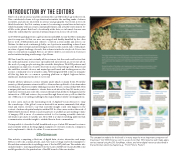
It’s impossible to describe the full breadth and scope of what GIS means for science and scientists without showing digital examples. So we have created a companion and complement to this book online. You can access it here:
GISforScience.com
This website, comprising collections of digital data, stories, interactive web maps, Python notebooks, journal articles, and even videos, brings real-world examples to life and demonstrates the storytelling power of the ArcGIS® platform. The website also includes links to learning pathways from the Learn ArcGIS site (Learn.ArcGIS.com) and blogs related to the practical use of ArcGIS in each of the case studies.
The companion website for this book is in many ways the most important component of the project. Visit GISforScience.com to access more than 100 interactive web maps, apps, stories created using ArcGIS StoryMaps, videos, and other digital resources described in the text broken down by chapter (e.g., “From Plots to Pixels”).


