


Page 10 - GIS for Science, Volume 3 Preview
P. 10
FOREWORD
By Edward O. Wilson
In many respects, geography and mapping are not just basic to science and technology. They are the same thing. In molecular biology, for example, a process affecting the whole organism is first tracked to a particular organ or system of organs, and then to tissues and chemicals responsible for the activity. The impact of the process is then defined in the changes it induces in other parts of the whole organism.
When I step back and look from a bit of a distance at my own research, the social biology of ants, it is easy to translate most of what I have learned into geographic patterns—from which species inhabit which islands and continents, and, for reasons at the opposite extreme—to which microscopic organs and tissues orient a single ant through its life cycle.
If you put a dollop of honey on the ground a short distance from the edge of a fire ant nest, one or two ants patrolling the area are sure to find it, likely within a few minutes. After feeding a while, the lucky scout returns to the nest, dragging its extruded sting on the ground behind it. The scout is laying a faint but potent chemical trail that runs from the discovered food back to the nest. Depending on how hungry the colony is, a number of the workers run out along the trail in search of the newly discovered food.
Where in the body does the substance, in biology called a pheromone, originate? Which of the glands, from three at the base of the mandibles in the front to those at the base of the sting in the rear, produce the trail pheromone? By dissecting glands from freshly killed fire ants and drawing artificial trails, I discovered the source to be a tiny sliver near the sting called Dufour’s gland. To that time, its role in ant biology had been unknown.
In another, more traditional exercise in geographical biology, I was able to shed light on the geological origin of the Greater Antilles, including Cuba, the Dominican Republic and Haiti, Puerto Rico, and Jamaica. Was this constellation a fragment of land that broke away millions of years ago from ancient Central America? Or did it arise from the sea from where it is located today? I obtained ant fossils preserved in amber approximately the same age as the origin of the Greater Antilles. The evidence I found favored the first hypothesis, a breakaway from Central America.
As biologists learn more and more about the biology and origins of Earth’s present- day fauna and flora, they will also create an even stronger armamentarium of scientific and practical geography.
In this context, I am heartened to see today’s scientists using GIS and other evolving technologies in their efforts to protect and restore biodiversity. Like my own work with the fire ants, the scientists featured in these pages are translating what they learn into geographic patterns for all of us to see, this time in the form of maps that are saving the world.
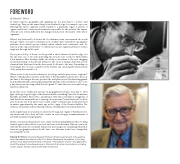
Edward O. Wilson, University Research Professor Emeritus at Harvard, is the guiding force that shapes the mission of the E.O. Wilson Biodiversity Foundation. In his long career, he has transformed his field of research—the behavior of ants—and applied his scientific perspective and experience to illuminate the human circumstance, including human origins, human nature, and human interactions.


