


Page 6 - GIS for Science, Volume 3 Preview
P. 6
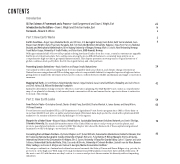
CONTENTS
Introduction
GIS for Science: A Framework and a Process—Jack Dangermond and Dawn J. Wright, Esri viii Introduction by the Editors—Dawn J. Wright and Christian Harder, Esri ix Foreword—Edward O. Wilson x
Part 1: How Earth Works
Earth’s Coastlines—Roger Sayre, Madeline Martin, and Jill Cress, U.S. Geological Survey; Kevin Butler, Keith Van Graafeiland, Sean Breyer, Dawn Wright, Charlie Frye, Deniz Karagulle, Esri; Tom Allen, Old Dominion University; Rebecca J. Allee, Rost Parsons, National Oceanic and Atmospheric Administration; Bjorn Nyberg, University of Bergen, Norway; Mark J. Costello, Nord University, Norway; Frank Muller-Karger, University of South Florida; and Peter Harris, GRID-Arendal, Norway
With approximately half of the world’s population living less than 65 miles from the ocean, coastal ecosystems are arguably Earth’s most critical real estate. Yet coastlines are among the more difficult features to accurately map; until now, no comprehensive high-resolution geospatial dataset existed. This chapter presents a new map and ecological inventory of global coastlines developed by Esri, the U.S. Geological Survey, and other partners.
2 4
Preventing Species Extinctions—Healy Hamilton and Regan Smyth, NatureServe 28
Our natural world is under increasing threat from incompatible land use, pollution, and climate change. Scientists at NatureServe are using advanced GIS modeling approaches to map suitable habitat for imperiled species at high resolution, giving decision-makers the information they need to reduce conflicts between wildlife and humans and target conservation measures.
Mapping Half-Earth—D. Scott Rinnan, Yale University; Greta C. Vega, Estefanía Casal, Camellia Williams, Vizzuality; and Joel Johnson
and Chris Heltne, E.O. Wilson Biodiversity Foundation
Spatial biodiversity knowledge is vital for effective conservation planning. The Half-Earth Project creates a comprehensive map of our planet’s biodiversity to inform and track conservation efforts and ensure that no species is driven to extinction from lack of knowledge.
42
Part 2: How Earth Looks 58
From Plots to Pixels—Christopher Oswalt, Charles (Hobie) Perry, David Bell, Charles Werstak Jr., James Garner, and Barry Wilson,
US Forest Service
Forest Inventory and Analysis (FIA), a US Department of Agriculture Forest Service program since 1930, collects data on more than 355,000 forest plots on public and private lands. FIA’s latest data, deployed in the cloud with sophisticated GIS analysis tools, remains a mission-critical planning tool for the agency.
Blueprint for a Better Future—Maryam Rabiee, United Nations Sustainable Development Solutions Network; and Ismini Ethridge, Columbia University; The nearly 200 member states of the United Nations aim to end poverty, protect the planet, and promote peaceful and inclusive societies by 2030. This chapter introduces the framework of these aspirational goals and examines how GIS is helping to move them forward.
Conserving the Last Ocean Frontiers—By Daniel Wagner and T. ‘Aulani Wilhelm, Conservation International, Center for Oceans; Alan M. Friedlander, National Geographic Society, University of Hawai‘i; Richard L. Pyle, Bernice P. Bishop Museum; Kristina M. Gjerde, International Union for the Conservation for Nature; Erin E. Easton, University of Texas Rio Grande Valley; Carlos F. Gaymer and Javier Sellenas, Universidad Catolica del Norte, Chile; Cassandra M. Brooks, University of Colorado Boulder; Liesbeth van der Meer, Oceana Chile, Santiago; and Lance E. Morgan and Samuel E. Georgian, Marine Conservation Institute.†
The unique combination of natural and cultural resources has made the Salas y Gómez and Nazca Ridges a top priority for protection on the high seas. With support from global datasets and GIS analysis, researchers have identified this area off the west coast of South America as a key location to conserve and protect diverse marine biodiversity without impacting industries.
60
76 90


